

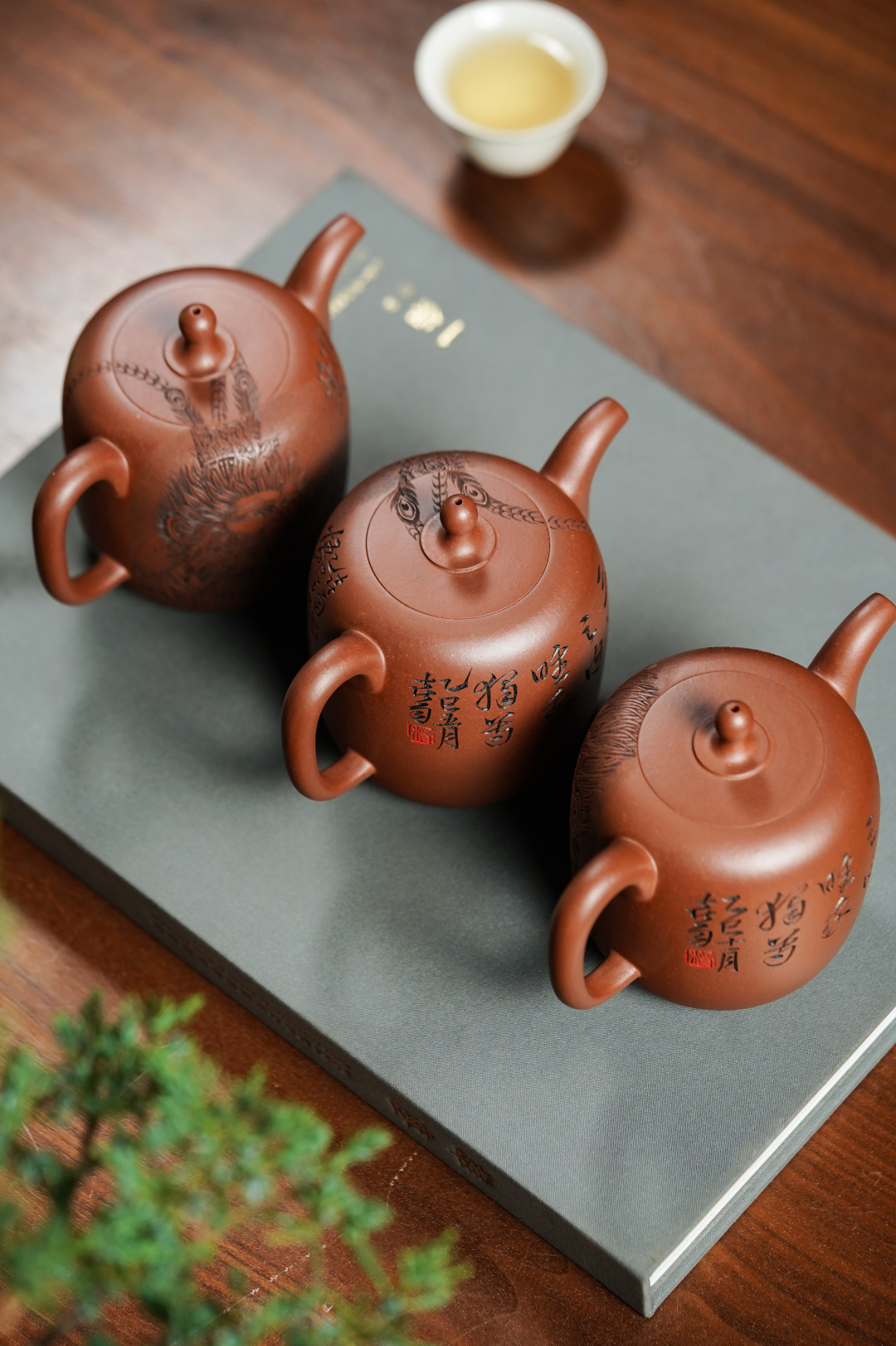
1. The Origins (Song & Yuan Dynasties) | 起源(宋元时期)
While tea drinking dates back thousands of years, the specific use of Yixing purple clay for teapots began around the Song Dynasty (960–1279).
虽然饮茶已有数千年历史,但专门使用宜兴紫泥制作茶壶始于宋代(960–1279 年)。
虽然饮茶已有数千年历史,但专门使用宜兴紫泥制作茶壶始于宋代(960–1279 年)。
Early pots were coarse and primarily used for boiling water or storing tea, not yet the refined brewing vessels we know today.
早期的壶较为粗糙,主要用于煮水或储茶,尚未成为我们今天所知的精致冲泡器皿。
早期的壶较为粗糙,主要用于煮水或储茶,尚未成为我们今天所知的精致冲泡器皿。
2. The Golden Age (Ming Dynasty) | 黄金时代(明代)
The true birth of the Yixing teapot as an art form occurred in the late Ming Dynasty (1368–1644).
紫砂壶作为艺术形式的真正诞生发生在明晚期(1368–1644 年)。
紫砂壶作为艺术形式的真正诞生发生在明晚期(1368–1644 年)。
-
Gong Chun (Supreme Spring): A legendary servant who is credited with creating the first refined Yixing teapot (the "Gong Chun Hu") in the early 1500s.
- 供春: 一位传奇的书童,被认为在 1500 年代初制作了第一把精致的紫砂壶(“供春壶”)。
-
Shift to Steeping: The Ming Emperor abolished compressed tea cakes, promoting loose-leaf tea. This required new teapots designed for steeping, perfect for Yixing clay.
- 冲泡方式的转变: 明代皇帝废除了团茶,推广散茶。这需要设计用于冲泡的新茶壶,而紫砂泥正好完美契合。
-
The Four Great Masters: In the late Ming, masters like Shi Dabin refined the techniques, establishing the classic shapes and methods still used today.
- 四大名家: 明晚期,时大彬等大师完善了技艺,确立了至今仍在使用经典器型和方法。
3. Flourishing Artistry (Qing Dynasty) | 艺术繁荣(清代)
During the Qing Dynasty (1644–1911), Yixing teapots reached new heights of complexity and decoration.
在清代(1644–1911 年),紫砂壶达到了复杂性和装饰性的新高度。
在清代(1644–1911 年),紫砂壶达到了复杂性和装饰性的新高度。
-
Chen Mansheng: A scholar-official who collaborated with potters, integrating calligraphy, painting, and seal carving onto teapots. This elevated the pot from a craft to a literati art.
- 陈曼生: 一位官员学者,与陶艺家合作,将书法、绘画和篆刻融入茶壶。这将壶从工艺品提升为文人艺术。
-
Imperial Patronage: Yixing pots became favorites of the Imperial Court, often exported to Europe where they inspired copies (like Meissen).
- 皇室赞助: 紫砂壶成为皇室的最爱,常被出口到欧洲,启发了当地的仿制品(如梅森瓷器)。
-
Diverse Styles: The era saw the rise of intricate "Hua Hu" (flower pots) and colorful glazed decorations.
- 风格多样: 这一时期见证了复杂的“花货”和多彩釉装饰的兴起。
4. Modern Era & Revival | 现代与复兴
In the 20th century, the industry faced challenges due to wars and political changes but experienced a strong revival.
20 世纪,该行业因战争和政治变革面临挑战,但经历了强劲的复兴。
20 世纪,该行业因战争和政治变革面临挑战,但经历了强劲的复兴。
-
Factory System: In the 1950s, the "Yixing Zisha Factory No. 1" was established, training a new generation of masters (like Gu Jingzhou).
- 工厂体系: 1950 年代,“宜兴紫砂一厂”成立,培养了新一代大师(如顾景舟)。
-
Gu Jingzhou: Regarded as the "Sage of Teapots" in modern times, his works set auction records and defined modern standards of excellence.
- 顾景舟: 被誉为现代的“壶艺泰斗”,他的作品屡创拍卖纪录,定义了现代的卓越标准。
-
Global Recognition: Today, Yixing teapot making is recognized as a National Intangible Cultural Heritage of China.
- 全球认可: 如今,紫砂壶制作技艺被认定为中国国家级非物质文化遗产。
5. Why History Matters Today | 为何历史在今天依然重要
Understanding the history helps you appreciate the value of your teapot.
了解历史有助于您欣赏手中茶壶的价值。
了解历史有助于您欣赏手中茶壶的价值。
When you hold a Yixing pot, you are holding a piece of living history, crafted with techniques passed down for centuries.
当您手持一把紫砂壶时,您握住的是一段鲜活的历史,其工艺已传承数个世纪。
当您手持一把紫砂壶时,您握住的是一段鲜活的历史,其工艺已传承数个世纪。
At ZenLeaf Direct, we honor this legacy by bringing authentic pieces from Yixing to your home.
在 ZenLeaf Direct,我们通过将正宗的宜兴作品带到您的家中来致敬这一传承。
在 ZenLeaf Direct,我们通过将正宗的宜兴作品带到您的家中来致敬这一传承。